Modus ETP + ETI
The Enterprise Ecosystem Transformation Platform for ERP Implementations
Unifying Strategy, Systems, People, and SI Partners to Deliver Successful ERP and Technology Transformation
In today's world, ERP is not the transformation — it is only one component inside an increasingly complex enterprise ecosystem.
Your organisation runs across hundreds of interconnected systems, multiple SI partners, complex integrations, global value chains, and diverse business teams.
When these elements don't work together, ERP or any major system transformation fails.
This is why we built Modus ETP (Enterprise Transformation Platform) and Modus ETI (Transformation Intelligence): a unified, digital transformation environment that aligns every system, every SI partner, every process, and every person to a single, coherent operating model.
This is enterprise transformation done properly.
This is Transformation-As-Usual (TAU).
ERP Is Not the Whole Picture
Your Full Enterprise Ecosystem Must Transform
ERP touches every domain, but it is surrounded by customer & commerce solutions, supply chain systems, finance & HR platforms, CRM & service tools, data lakes, analytics, PLM, PIM, middleware, integration layers, store systems, legacy applications... and is implemented by multiple SI Partners using different methodologies, tools, and assumptions.
Most organisations try to implement ERP without bringing all ecosystem components together.
This leads to:
ERP cannot succeed in isolation. Your entire enterprise must be aligned around it.
Modus ETP + ETI
The Only Platform That Unifies the Business, the Systems, and the SIs
Modus eliminates the fragmentation by providing a single integrated platform for:
Bringing all these elements into one environment creates:
Transformation in Action
Explore our methodology and enterprise transformation capabilities
The Modus Method
Learn about our proven transformation methodology
8 Key Capabilities
Comprehensive platform features that transform your enterprise ecosystem
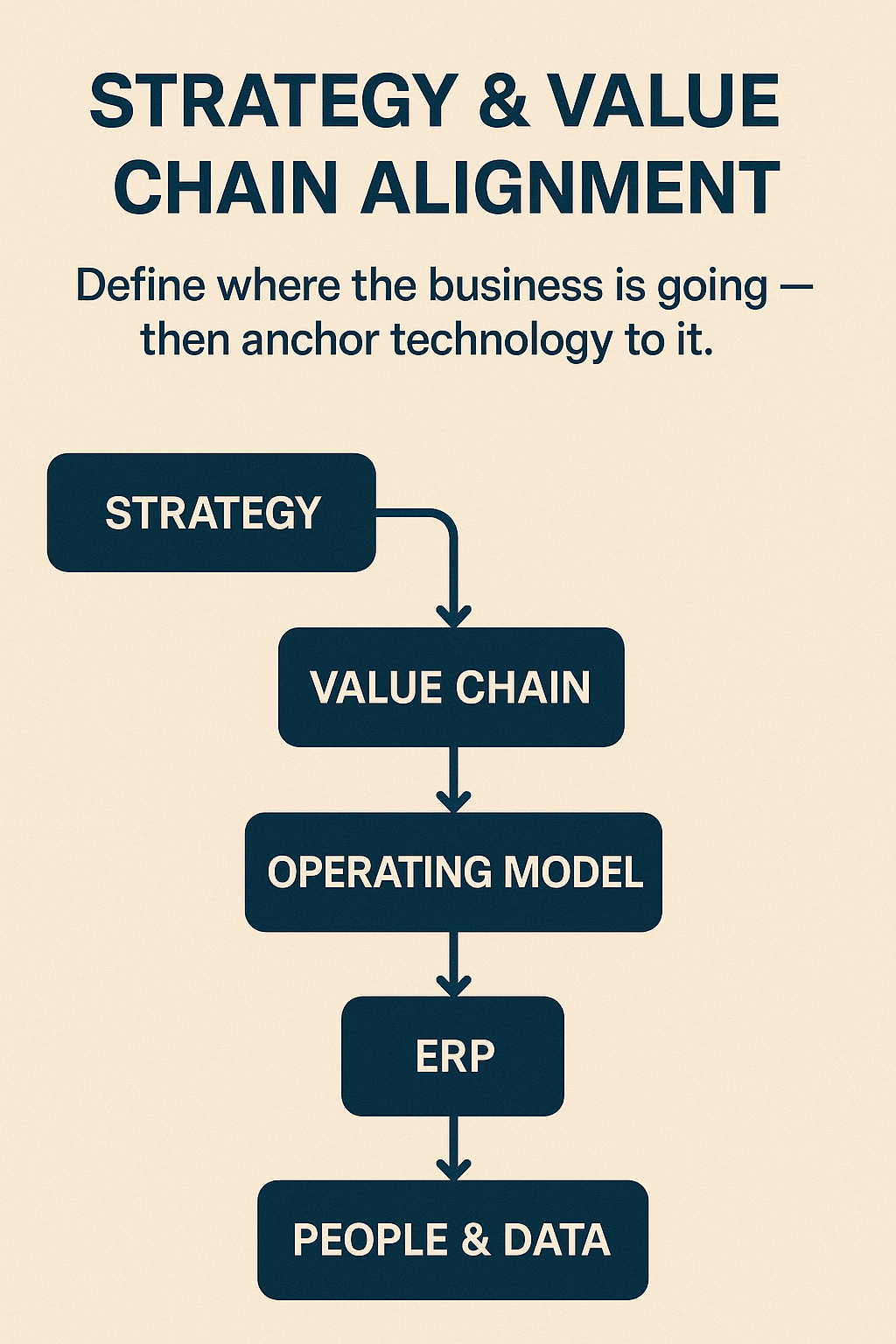
Strategy & Value Chain Alignment
Define where the business is going — then anchor technology to it.
ERP or large-scale system transformation must begin with strategic clarity. Using the Strategy Hub and Value Chain Modeler, Modus helps you translate strategy directly into operating model and system requirements. This creates a line of sight from Strategy → Value Chain → Operating Model → ERP → People & Data.
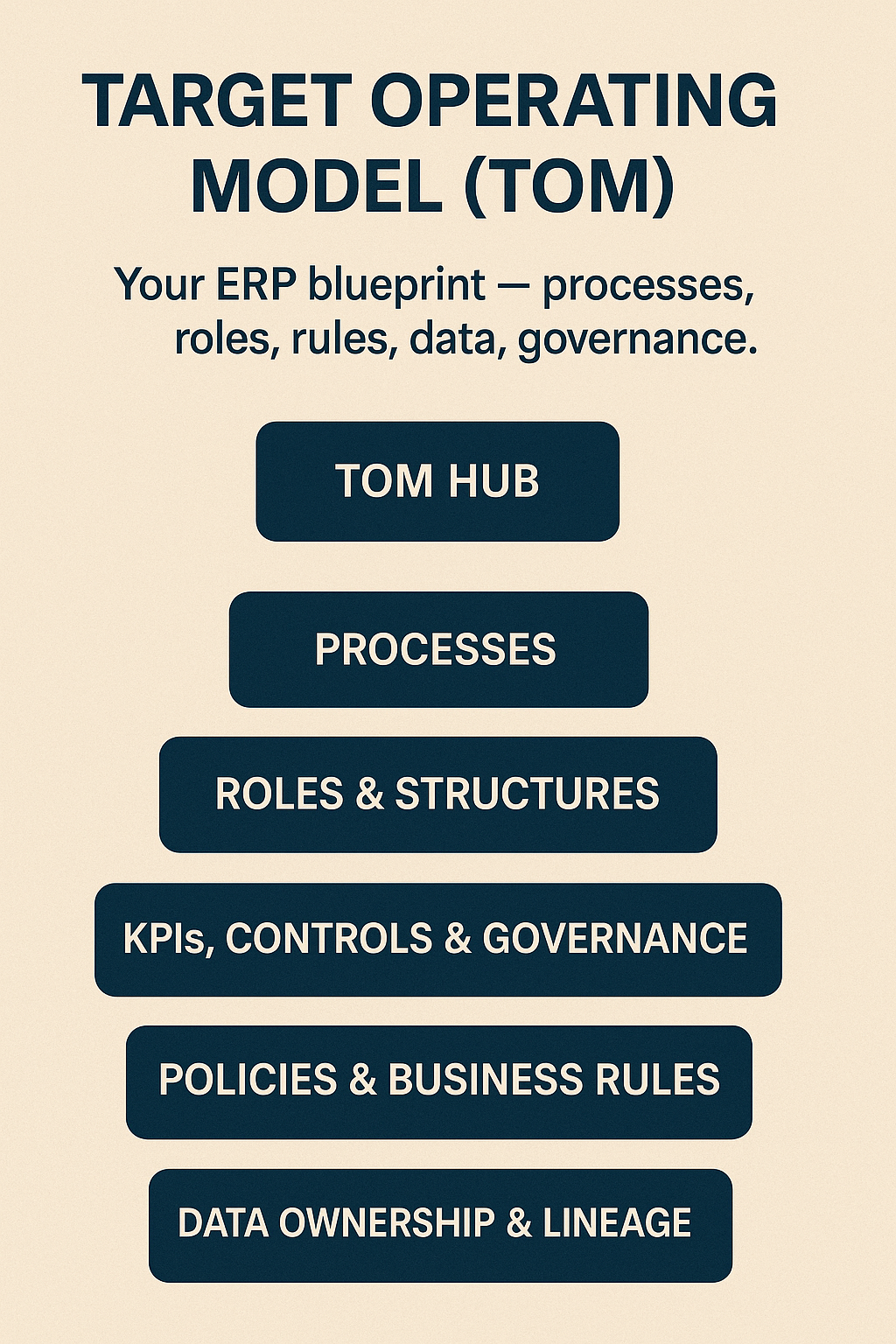
Target Operating Model (TOM)
Your ERP blueprint — processes, roles, rules, data, governance.
The TOM Hub defines the To-Be enterprise across Processes, Roles & structures, KPIs, controls & governance, Policies & business rules, Data ownership & lineage, and System touchpoints & integrations. It becomes the definitive business blueprint that all SI partners must follow. No misalignment. No interpretation gaps. No rework.
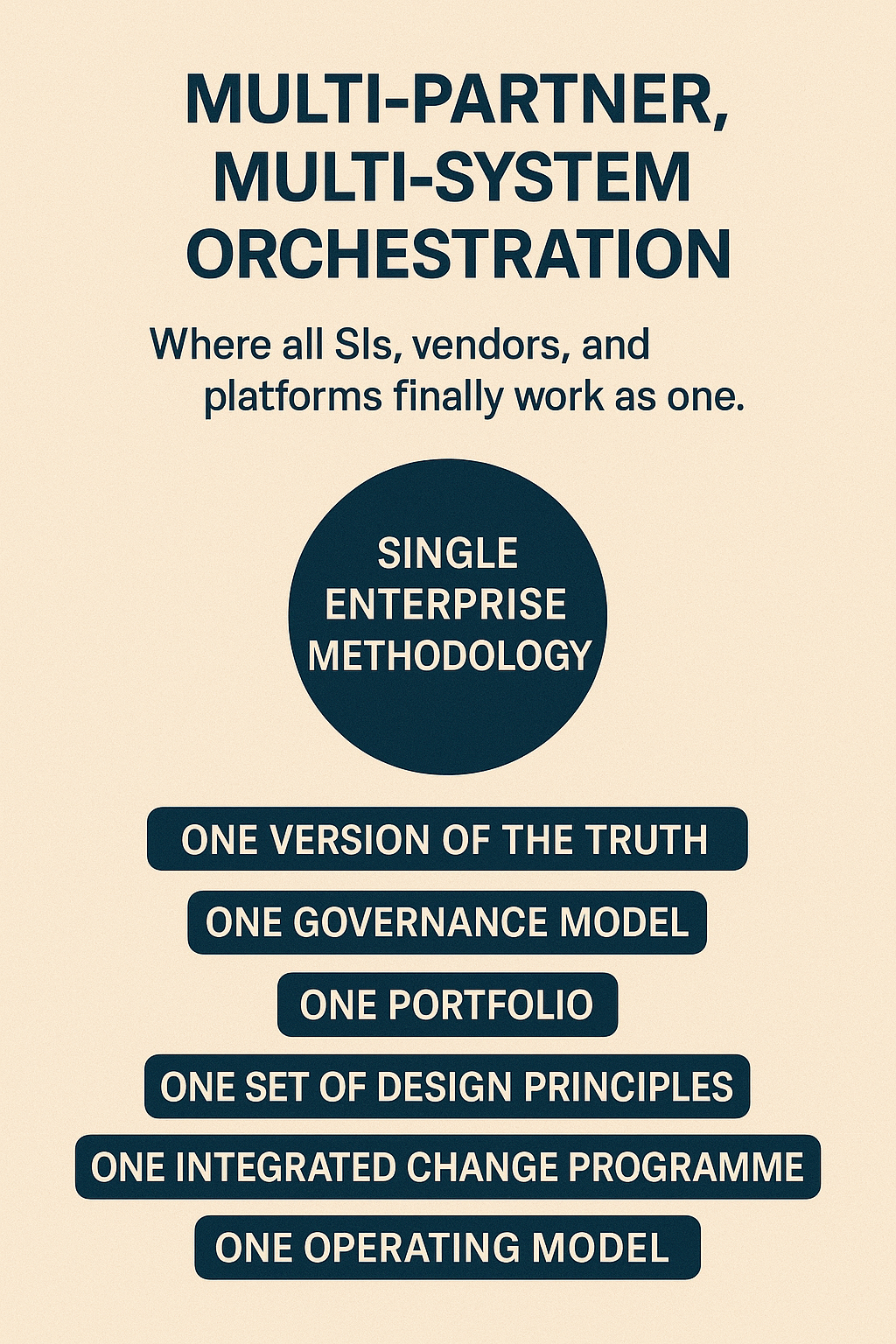
Multi-Partner, Multi-System Orchestration
Where all SIs, vendors, and platforms finally work as one.
Modus creates a single enterprise methodology that all partners follow — SAP, Oracle, Microsoft Dynamics, Infor, commerce vendors, integration teams, and more. This means one version of the truth, one governance model, one portfolio, one set of design principles, one integrated change programme, and one Operating Model. The result: ecosystem-wide coherence and dramatically reduced delivery friction.
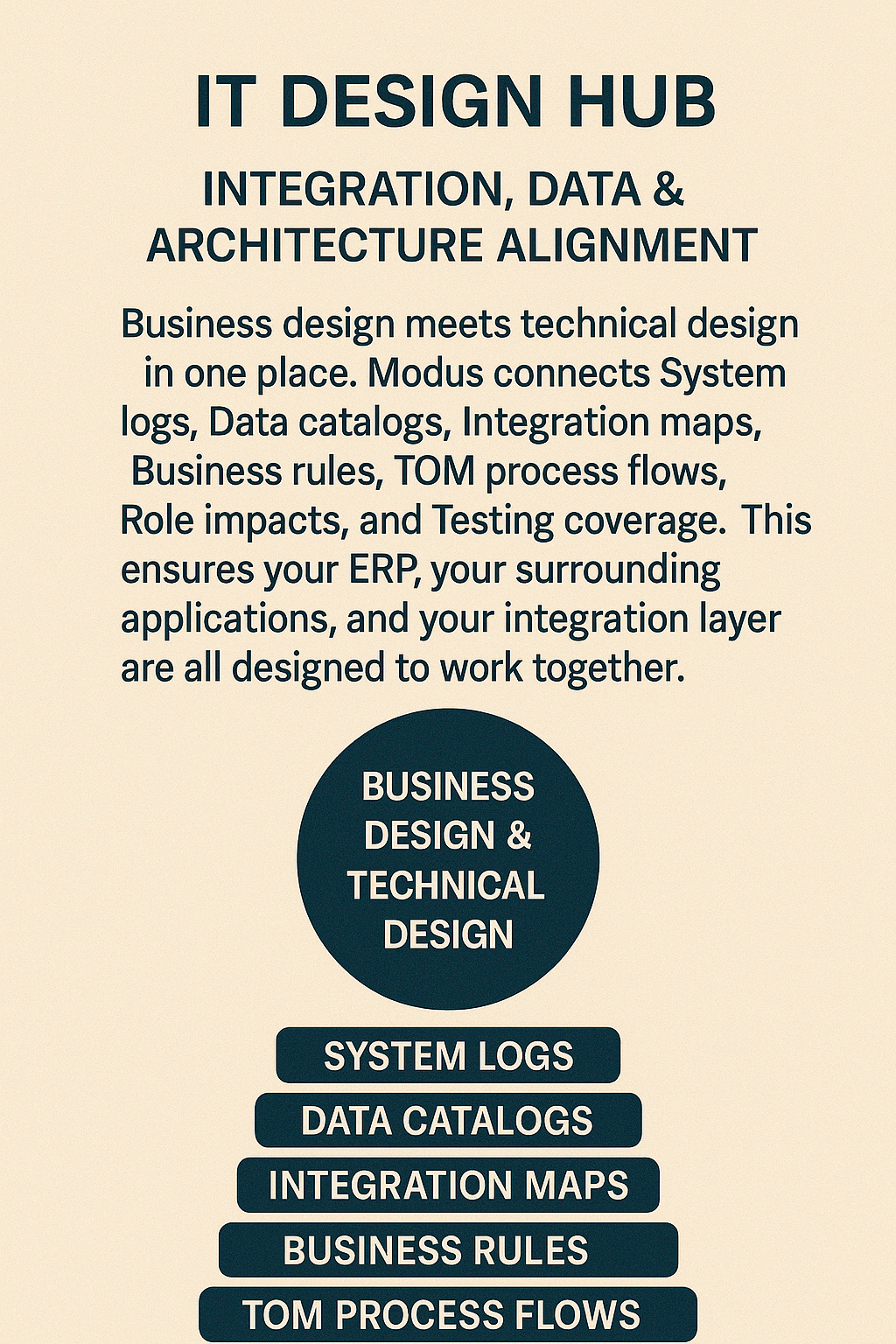
IT Design Hub
Integration, Data & Architecture Alignment
Business design meets technical design in one place. Modus connects System logs, Data catalogs, Integration maps, Business rules, TOM process flows, Role impacts, and Testing coverage. This ensures your ERP, your surrounding applications, and your integration layer are all designed to work together.
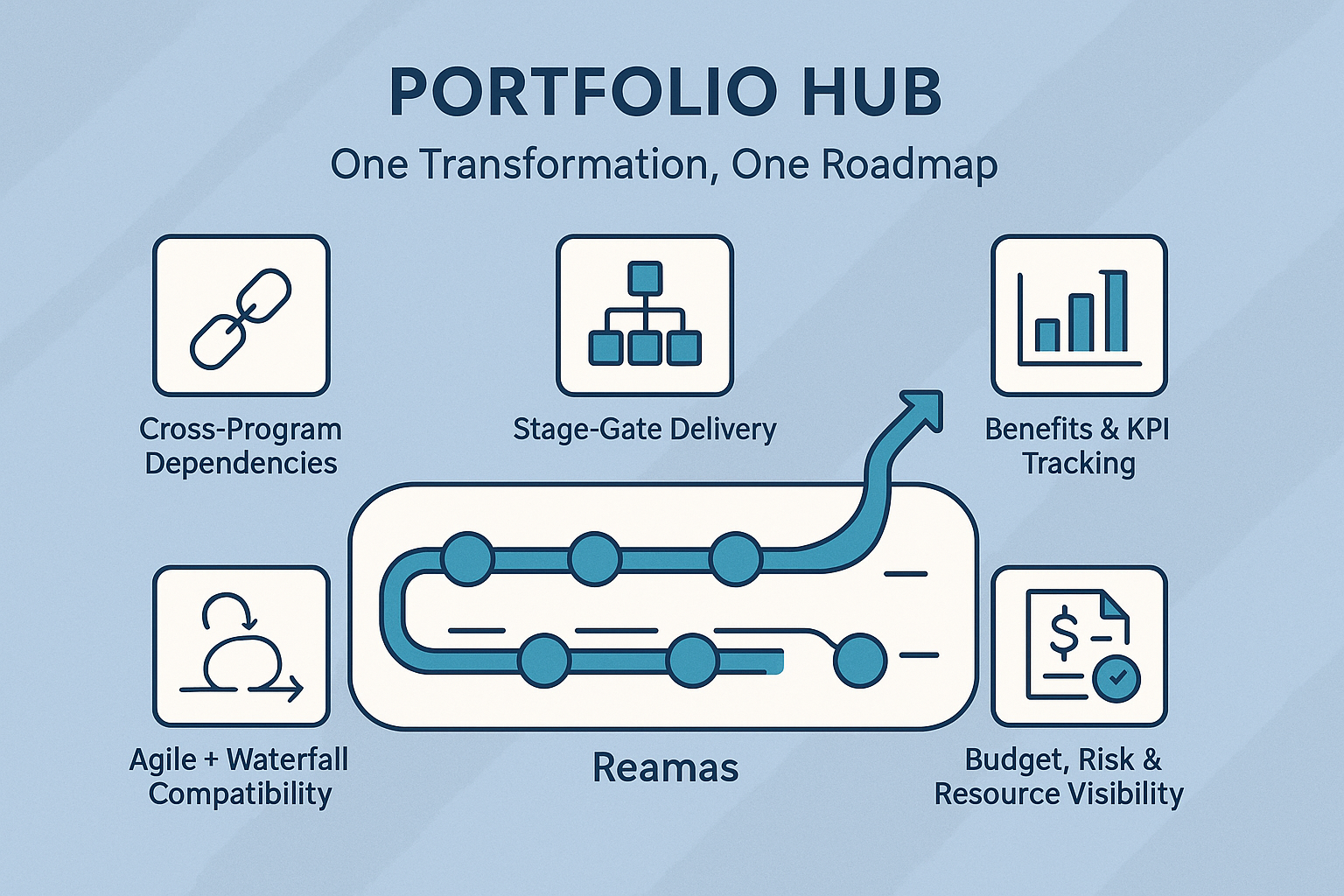
Portfolio Hub
One Transformation, One Roadmap
Total visibility and control across all ERP and ecosystem programmes. The Portfolio Management Hub brings everything together with cross-program dependencies, stage-gate delivery, benefits & KPI tracking, budget, risk & resource visibility, and agile + waterfall compatibility. Executives, SIs, and business teams all see the same reality — in real time.
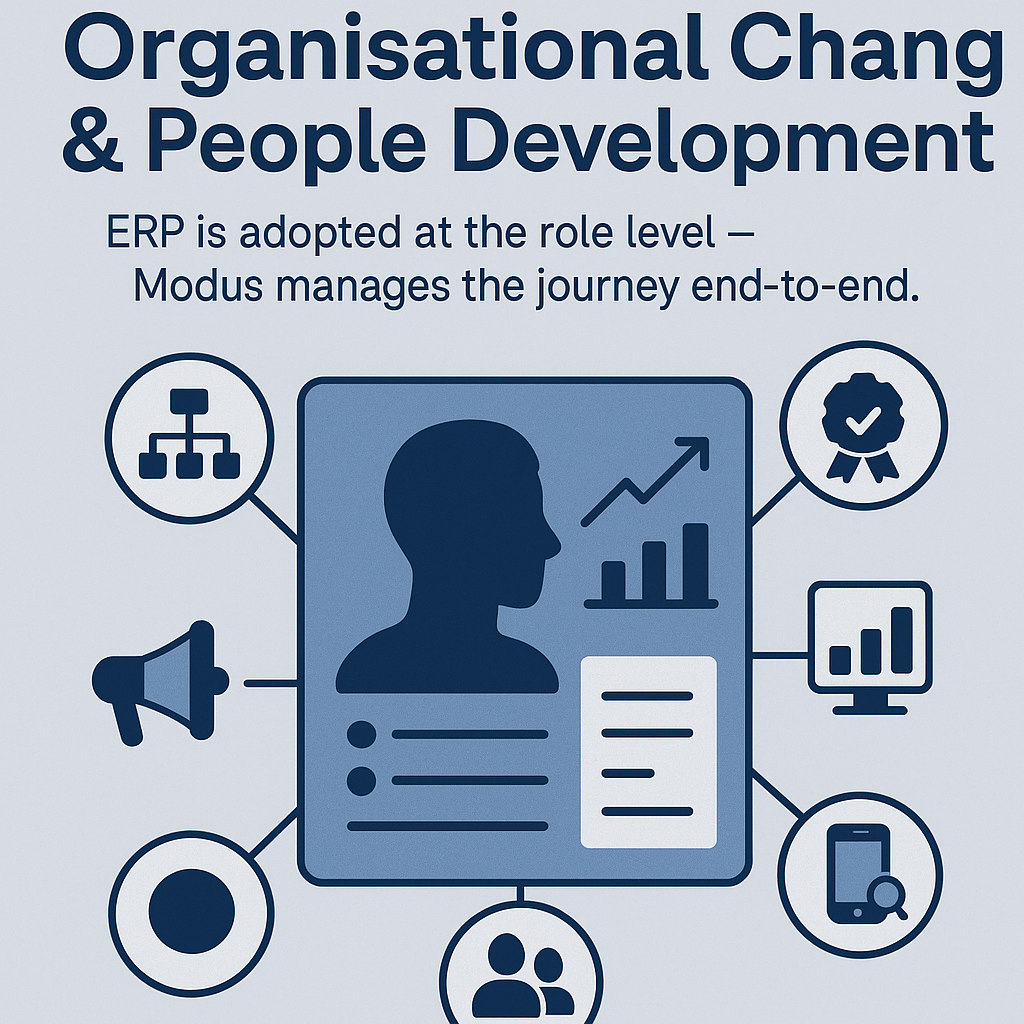
Organisational Change & People Development
ERP is adopted at the role level — Modus manages the journey end-to-end.
The OCM Hub delivers role-level impact assessment, capability mapping, training frameworks, communications planning, adoption dashboards, and mobile engagement & pulse surveys. This ensures behaviour change, not just system usage.
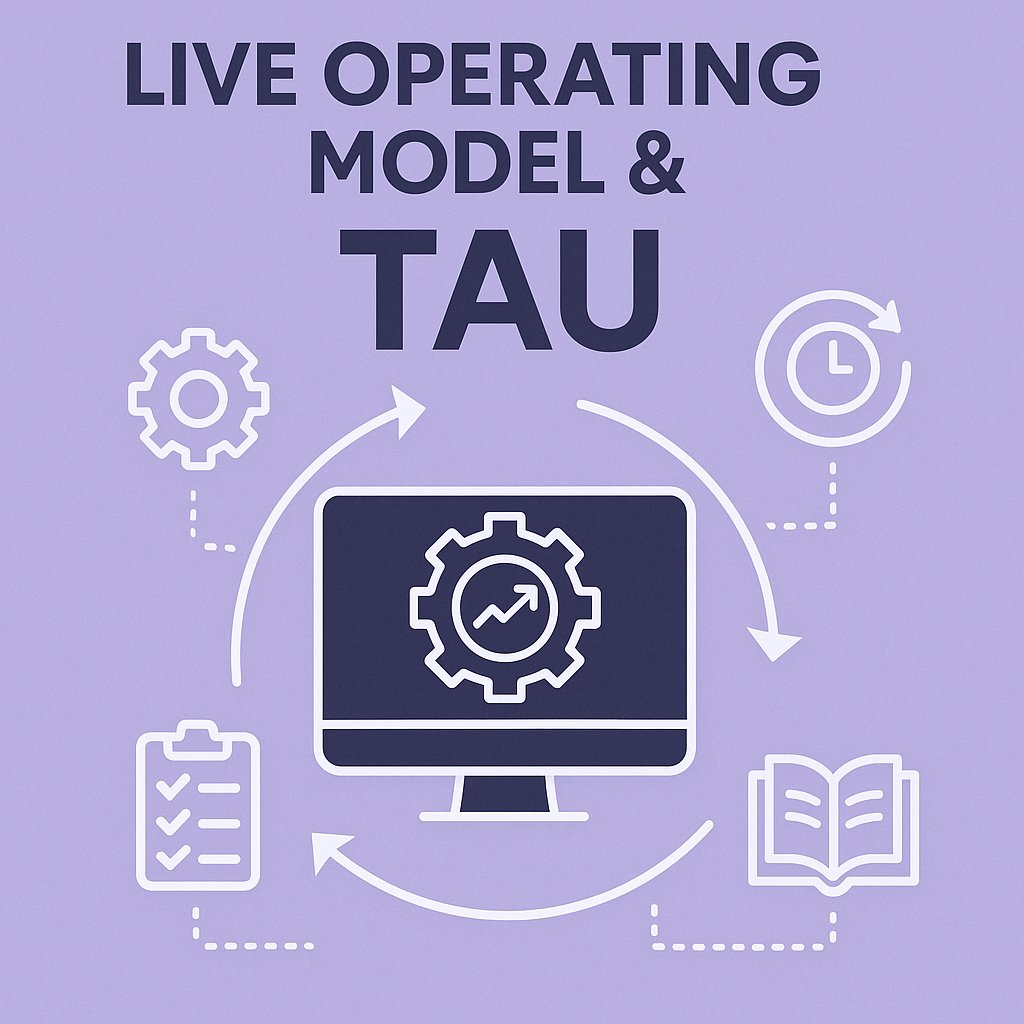
Live Operating Model & TAU
Transformation-As-Usual: Your enterprise never stops evolving.
After ERP go-live, Modus ensures your organisation moves into a rhythm of continuous improvement using the Live Operating Model and Optimisation & Governance Hub. This delivers process optimisation, issue management & continuous updates, governance cycles, reusable transformation assets, and a living enterprise knowledge base. Transformation is no longer a 'project.' It becomes a capability.
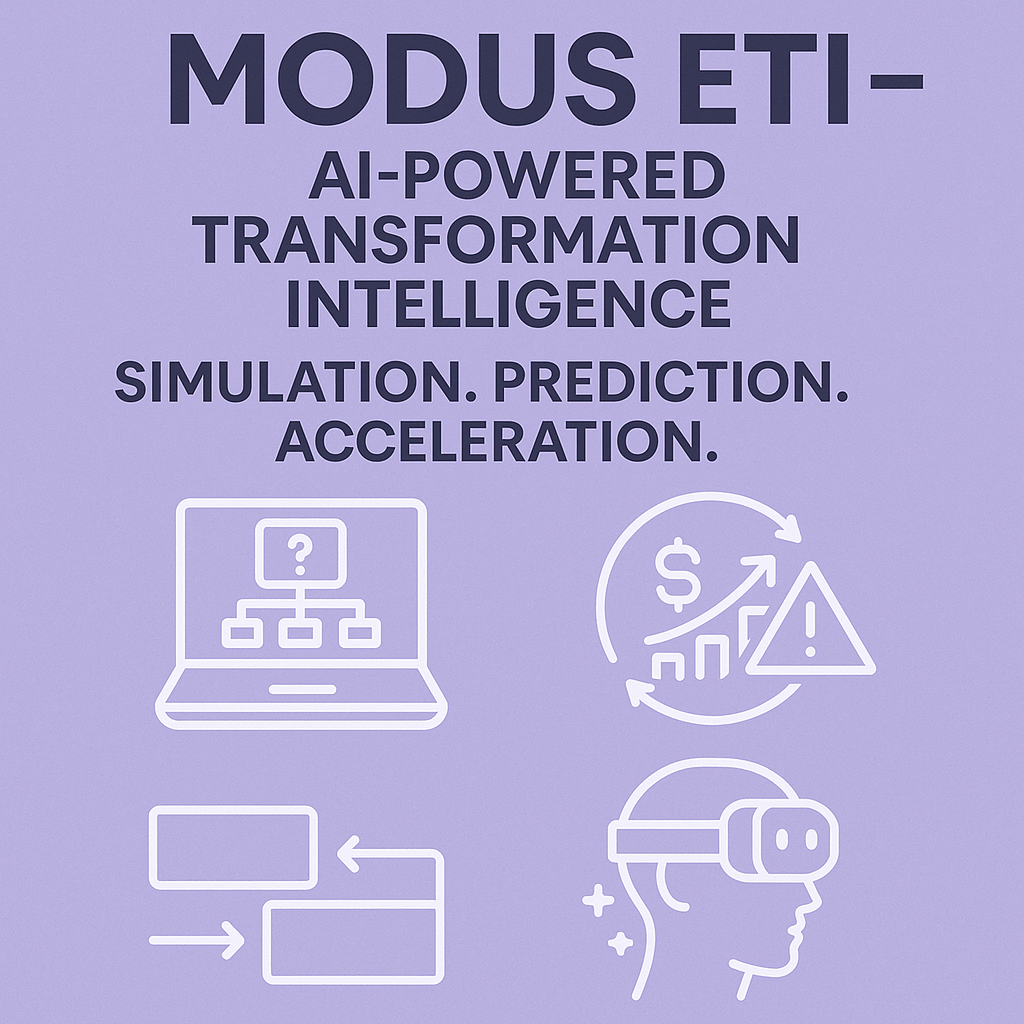
Modus ETI – AI-Powered Transformation Intelligence
Simulation. Prediction. Acceleration.
Using ETI, organisations can run simulations across their entire ecosystem: What-if Operating Model scenarios, Impact on cost, timeline, capability & risk, Roadmap comparisons, Skill/resource modelling, In-flight change impact predictions, and Mixed-reality collaboration for design. This transforms decision-making from reactive to intelligent.
🎯 The Modus Promise
We don't just implement ERP. We unify your entire enterprise ecosystem so ERP (and all systems) deliver their intended strategic value.
Modus ETP + ETI provides:
- ✔ One platform
- ✔ One methodology
- ✔ One operating model
- ✔ One ecosystem
- ✔ One transformation
This creates:
Faster delivery
Lower risk
Clearer accountability
Higher user adoption
Stronger strategic alignment
Measurable business outcomes
Executive Message
Why Modus ETP + ETI Are Critical for ERP Success
ERP must drive strategic growth, customer experience improvement, and enterprise agility—not just system replacement.
ERP becomes a technology upgrade with limited ROI; transformation stalls; strategic goals are not realised.
Strategy-to-execution alignment, Value Chain impact clarity, Operating Model redesign, and enterprise-wide orchestration. Ensures ERP becomes a true business transformation engine.
You need clean architecture, data integrity, integration clarity, and system adoption across the enterprise.
Technical debt, misaligned integrations, uncontrolled customisations, and constant rework during build and testing.
IT Design Hub: system logs, data catalogs, integration maps tied to Value Chain and TOM—ensuring clean build, predictable testing & scalable architecture.
ERP must improve control, compliance, reporting, forecasting, and cost efficiency.
Financial processes break during transition; compliance gaps arise; lack of transparency into costs, risks, and benefits.
Operating Model & Portfolio Hub: alignment of financial rules, KPIs, controls, budgeting, and measurable benefit frameworks across programmes.
ERP impacts pricing, range, supply chain, merchandising, buying, logistics, and store operations. You need clarity on what changes and why.
Operational disruption, unclear process impacts, adoption resistance, reduced sales productivity, customer experience issues.
Value Chain Impact Modelling & Business Design: end-to-end retail/industry process mapping, role-level impacts, optimisation opportunities, readiness planning.
Ready to Transform Your Enterprise?
Let Modus unify your business, systems, SI partners and people into one coherent, high-performance transformation engine.
This is the future of enterprise transformation.
This is Modus.
.png)